







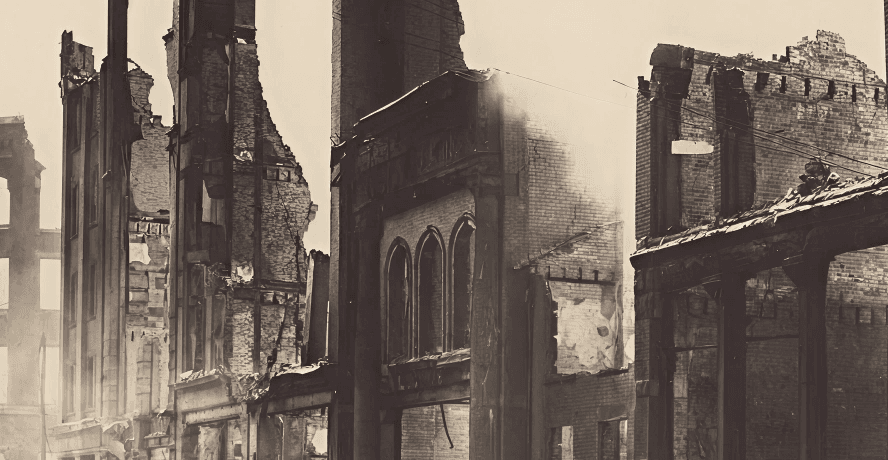
Toronto has seen its share of transformational events, but few compare to the sheer scale and destruction of the Great Fire of 1904. Over a century later, it remains one of the most impactful moments in the city’s history. On the night of April 19, downtown Toronto was lit ablaze, forever altering its urban landscape and reshaping how the city approached building safety and emergency response.
The Night Everything Changed
The fire began just after 8 p.m., when a police constable noticed flames erupting from the Currie Building at 58 Wellington Street. That location, now close to the TD Centre, quickly became the epicenter of an inferno that would rage through the night.
Within eight hours, the fire had leveled roughly 20 acres of downtown, destroying buildings, warehouses, and offices. For comparison, Ground Zero in New York is about 16 acres. The flames moved fast through the dense business district, fed by dry spring conditions and flammable construction materials common at the time.
No Lives Lost, but a City Changed
Remarkably, no fatalities were recorded, a rare outcome in fires of this magnitude. The timing played a key role. Since the blaze started after working hours, most buildings were unoccupied. Still, five people were injured, the most serious being a broken leg.
The economic toll was staggering. Damages were estimated at 10 million dollars in 1904 currency. Around 5,000 people lost their jobs, and major parts of the financial district were reduced to rubble. The fire also burned through an estimated 10 million liters of water before it was brought under control.
Firefighters From Beyond the City
More than 250 firefighters battled the flames, with reinforcements arriving from Hamilton and Buffalo. Their efforts helped prevent the fire from spreading even further, particularly to the north and east. Without their quick response, the destruction could have extended well beyond the core of the downtown area.
Photos That Captured the Aftermath
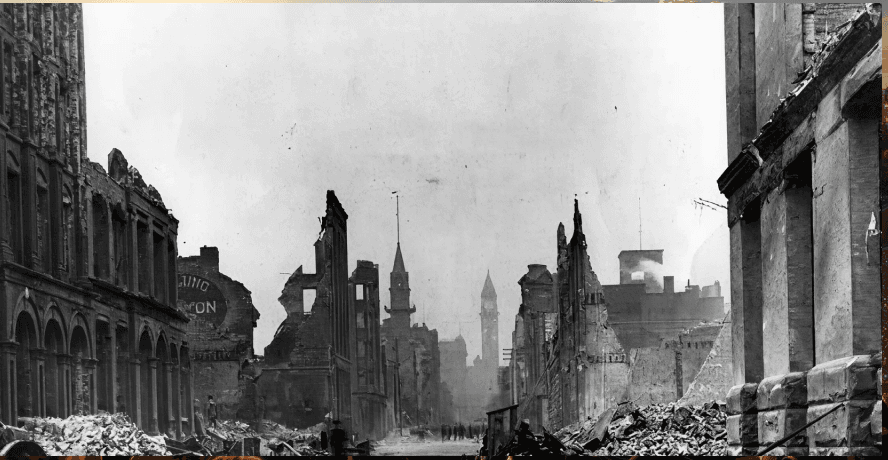
Historical images from the Ontario Archives and Toronto Archives offer a chilling look at what was left behind. These photos show streets like Bay and Wellington completely flattened. Before-and-after shots from 1903 and 1904 document the abrupt transformation of entire blocks. Iconic views from rooftops and major intersections provide a visual timeline of loss and resilience.
Bay Street: Before and after the fire
Front Street: Viewed from Yonge Street
Queen’s Hotel Rooftop: Shots showing skyline devastation
Old Union Station: Visible ruins in the background
Melinda Street: Charred façades and skeletal remains
Lasting Impact on Toronto’s Development
The Great Fire of 1904 didn’t just leave physical scars. It led to stricter fire codes, better infrastructure planning, and improvements in the city’s emergency services. Buildings constructed after the fire used more fire-resistant materials, and Toronto began to rethink how its downtown core was designed.
It’s a story that serves as a reminder of how quickly a city can change and how resilience can reshape the future.



















Recommended for you
Breaking Down the Elements of a Masterpiece Painting
The Revival of Classical Art in a Digital Age
Must-See Art Exhibitions Around the World This Year
The Revival of Classical Art in a Digital Age