







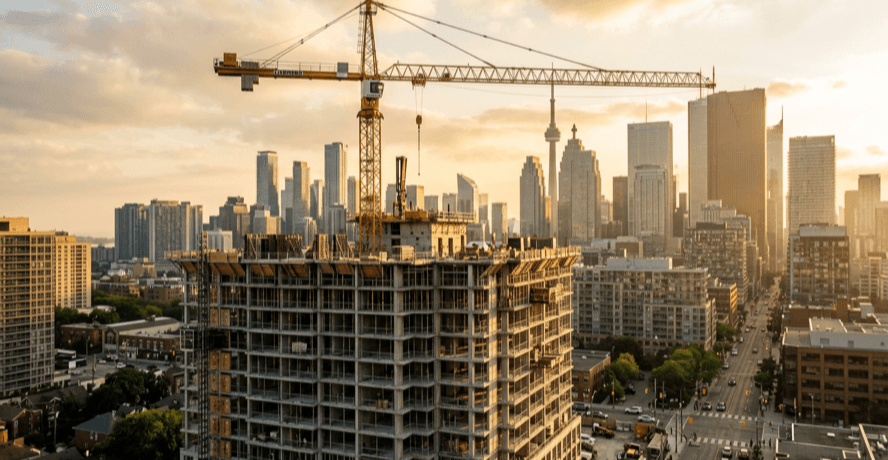
The cranes are building something different now
Look up at almost any construction site across the Toronto area right now, and the tower going up is increasingly meant to be rented, not sold. As of late July 2026, purpose-built rental units under construction in the region hit 38,841, edging past the 36,635 condo units still being built. Another 2,513 rental units broke ground in July alone. So for the first time, this city's building more rentals than condos.
And that's not a rounding-error crossover. It's a structural flip in how Toronto adds homes. For roughly two decades, the condo tower was the engine behind nearly every new highrise, with individual investors buying presale units that bankrolled the construction. Analysts are calling this the clearest sign yet that the building model itself is changing.
Why developers pivoted
The short version? The condo math stopped working. Presales are the lifeblood of condo financing, and they've stayed frozen. Investors who once lined up to buy units off a floor plan have stepped back, and without enough of those deposits, a project can't lock down the financing to break ground. Empty sales offices don't put shovels in the dirt.
Purpose-built rental fills that gap with a different equation. Instead of selling hundreds of individual units up front, a developer or institutional owner keeps the whole building and collects rent for decades. It's slower money, sure. But it's patient money, and right now it's the only model that reliably pencils out. Government incentives aimed at rental supply have nudged the numbers even further that way.
So the pivot isn't sentimental. Builders follow the financing, and the financing has moved to rentals.
What it means for renters
More purpose-built rental under construction is, on balance, good news for renters. There are two caveats worth naming plainly, though.
First, the upside: supply. Nearly 39,000 rental units in the pipeline means thousands of professionally managed homes landing over the next few years, purpose-built instead of the scattered investor-owned condos that have carried so much of Toronto's rental market. That kind of supply, if it keeps coming, is what eventually takes the pressure off rents. And more competition among landlords tends to favour tenants.
Now the caveats.
Timing
Construction is slow. A unit breaking ground in July 2026 isn't a lease listing next month. Renters feeling the squeeze today won't see relief until these towers finish and fill up, which realistically means a multi-year wait.
Price point
New purpose-built rental tends to launch at the top of the market, not the bottom. These are new buildings with new-building rents. More supply can ease the overall pressure over time, but the first tenants through the door shouldn't expect a bargain.
Stability
Purpose-built rental is usually owned by one landlord for the long haul, which can mean steadier management than renting an investor's single condo that might get sold out from under you. So if you're the kind of renter who values not moving every year, that stability is worth real money.
What it means for would-be condo buyers
If you were waiting to buy a condo, the picture's a little more complicated. Fewer condo starts today means fewer new units delivered a few years out. That tighter future pipeline could firm up prices on the completed condo stock down the line, even while today's market stays soft.
For now, though, the frozen presale market cuts the other way. Sellers are competing for a thin pool of buyers, and that hands anyone shopping the resale market some genuine leverage. So if you're a buyer with financing lined up and a bit of patience, this is a market that rewards being choosy rather than rushing in.
The longer-term question is what happens to the investor-owned condo as a rental source. If institutions are building the rentals now, the small investor who bought a unit to lease out may find the economics a lot less attractive, and that could gradually reshape who owns Toronto's rental housing.
What future buildings will look like
Design follows financing, so expect the buildings themselves to change. A tower built to rent forever is planned differently than one built to sell off in pieces. Owners who hold for the long haul care about durability, operating costs, and amenities that keep tenants renewing, everything from shared work spaces to on-site management to layouts built for longer stays rather than a quick resale.
You'll probably see more units aimed at families and long-term tenants too, rather than the compact investor-friendly studios that defined the presale era. When the owner is planning to run a building for 40 years, the decisions get made for the people actually living there, not for the spreadsheet of a presale buyer.
The bottom line
Toronto isn't building less. It's building differently. The crossover of rental construction past condos is less a headline number than a signal that the city's housing engine has switched fuel. For renters, it points toward more supply and steadier landlords, though not overnight and not cheap. For buyers, it means leverage now and a thinner condo pipeline later.
We've been tracking how the downturn is already reshaping the landlord side of this market, and this construction flip is really the supply-side half of the same story. So keep an eye on whether these rental starts hold up over the next year. If they do, the Toronto skyline will keep filling with towers, just ones you lease instead of buy. And for more on the money and market side of the city, check out our business coverage.















Recommended for you
Breaking Down the Elements of a Masterpiece Painting
The Revival of Classical Art in a Digital Age
Must-See Art Exhibitions Around the World This Year
The Revival of Classical Art in a Digital Age